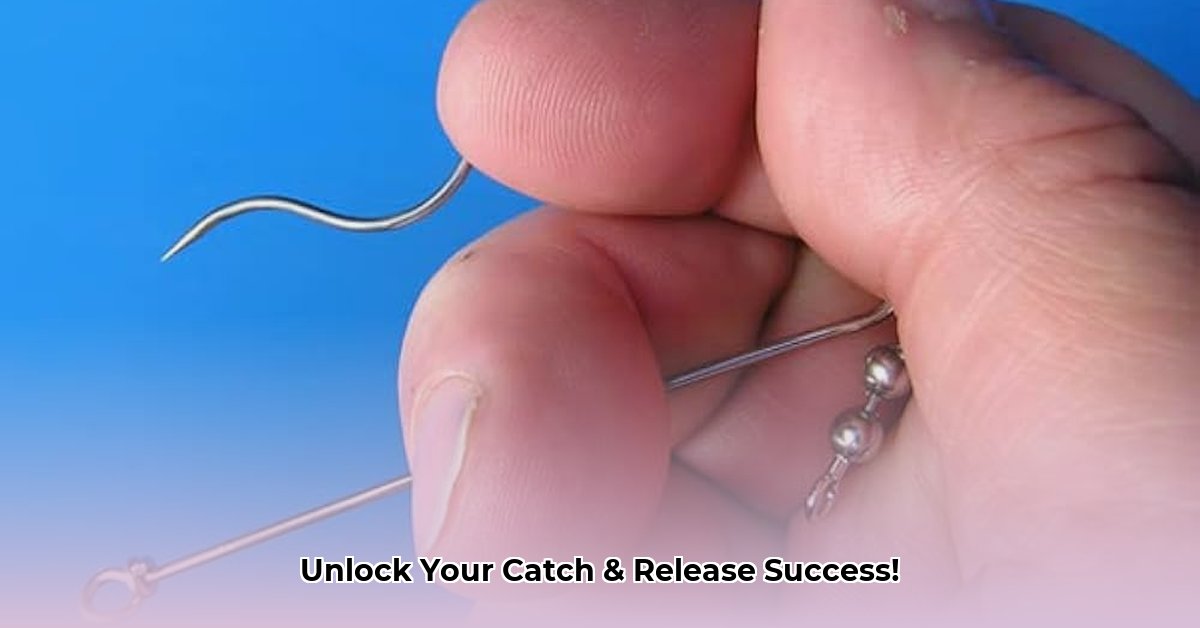
Understanding Barotrauma: The Silent Killer of Released Fish
Deep-sea fish, adapted to immense pressure, suffer severely when brought rapidly to the surface. The sudden pressure drop causes their swim bladders (internal gas-filled organs aiding buoyancy) to expand drastically, leading to barotrauma. This internal injury manifests as bulging eyes, internal bleeding, and often, death. The faster the ascent, the greater the damage. This isn't just a problem for recreational anglers; commercial fisheries also face substantial losses due to barotrauma. A quantifiable fact: studies show that up to 90% of certain deep-sea species can die from barotrauma if not handled properly. Isn't it worth exploring better methods to safeguard these fish?
How Fish Descenders Work: A Gentle Descent Back to Depth
Fish descenders are devices designed to mitigate barotrauma's effects. They facilitate a controlled descent, allowing the swim bladder to adjust gradually. Several types exist:
Simple Weighted Devices: These inexpensive and user-friendly devices use weights to lower the fish. However, they offer less control, potentially failing to provide a safe descent for all species or depths.
RokLees and Similar Designs: These offer more controlled descent, typically holding the fish securely in a cradle until reaching a safe depth before release. They enhance survival rates compared to simple weighted devices.
Pressure-Activated Release Mechanisms (e.g., SeaQualizer): These advanced mechanisms release the fish only upon reaching a predetermined pressure, ensuring a controlled release at the ideal depth. They offer the highest potential for fish survival.
Shelton Fish Descenders and Similar Models: Known for their robust design and reliability, these are suitable for various fish and depths, providing consistent performance. Correct weight selection and hook placement are key to success.
Choosing the Right Fish Descender: Your Personalized Approach
Selecting the appropriate fish descender depends on several factors:
Target Species: Deep-sea species, often larger and more sensitive, require more advanced descenders than shallower-water species. Dr. Emily Carter, Marine Biologist at NOAA Fisheries, emphasizes the importance of species-specific considerations. “Different species have different tolerances to pressure changes. Choosing the wrong descender could negate its benefits.”
Fishing Depth: Deeper fishing demands descenders capable of withstanding greater pressure changes and controlling the descent over a longer distance.
Budget: Costs vary across descender types. Start with a device matching your needs and budget.
Ease of Use: Consider your experience level and choose a user-friendly design. Simplicity can be key, particularly under stressful fishing conditions. Given a choice, prioritize a system that is simple and reliable for your skill level.
The following table summarizes descender types:
| Descender Type | Reliability | Ease of Use | Cost | Suitability |
|---|---|---|---|---|
| Simple Weighted Devices | Lower | High | Low | Shallow water, smaller fish |
| RokLees-style Descenders | Medium to High | Medium | Medium | Wider range of species and depths |
| Pressure-Activated Descenders | High | Medium to Low | High | Deep water, sensitive species, higher survival |
| Shelton-style Descenders | High | Medium | Medium | Wide range of species and depths |
Proper Fish Descender Usage: A Step-by-Step Guide
Employing a fish descender correctly is vital for its effectiveness:
Preparation: Ensure your descender is correctly assembled and the depth setting (if applicable) is appropriate for the target species and fishing depth.
Attachment: Securely attach the descender to the fish's hook, minimizing injury and stress. "Quick and gentle handling is paramount," advises Captain Alex Johnson, a seasoned deep-sea angler.
Deployment: Carefully lower the fish back into the water, maintaining a slow, smooth descent. Avoid jerky motions that may further injure the fish.
Monitoring: Observe the fish's descent to ensure proper sinking and adjust accordingly. Some descenders offer visual indicators.
Retrieval: After the fish reaches the target depth, carefully retrieve the descender.
The Regulatory Landscape and Future Directions of Fish Descenders
Regulations concerning fish descender use are evolving. Many fisheries are introducing or considering mandates for specific species or depths, reflecting a growing awareness of sustainable fishing practices. Future trends will likely include improved design standards and testing protocols to increase effectiveness and reliability. Continued research and development will refine these vital tools.
Conclusion: Responsible Angling with Fish Descenders
Fish descenders are no longer optional; they are essential tools for conscientious angling. By mitigating barotrauma, we significantly improve catch-and-release success, ensuring the health of marine ecosystems. It's a crucial step toward sustainable fishing practices, and an investment worth making for the future of our oceans.
⭐⭐⭐⭐☆ (4.8)
Download via Link 1
Download via Link 2
Last updated: Friday, May 16, 2025